

Choosing a microneedling aesthetician takes more than checking reviews or admiring before-and-after photos. You need to know whether the person can legally perform the proposed treatment, has relevant hands-on training and follows appropriate infection-control practices. A course certificate alone does not answer those questions.
In the US, the answer also depends on where you live, the practitioner’s underlying license and the procedure being offered. Conventional microneedling and radiofrequency microneedling are not interchangeable services. Before paying a deposit, use the checks below to separate verifiable qualifications from marketing claims and identify when a medical consultation is the better starting point.
Start with legal scope, not a course certificate
An aesthetician or esthetician license does not automatically authorize every procedure advertised by a spa. State rules differ, and medical microneedling may fall outside an esthetician’s permitted scope of practice.
The first question for a microneedling aesthetician should be: “What active professional license authorizes you to perform this exact procedure in this state?” Ask for the license type, number and name under which it is registered. Verify those details through the relevant state licensing board rather than relying on a framed certificate.
Check the license’s status and any publicly available disciplinary history. If the provider says treatment is performed under medical supervision, ask who supervises, what that arrangement involves and whether the person actually performing the procedure is legally permitted to do so. A medical director’s name on a website does not settle that question.
Likewise, a short needle setting or a service described as a “cosmetic facial” is not, by itself, proof that the procedure falls within someone’s legal scope.
What should you check in Michigan?
Do not assume that a Michigan esthetician license establishes permission to perform skin-penetrating microneedling. Check the current requirements with Michigan’s Department of Licensing and Regulatory Affairs, identifying both the practitioner’s license and the exact treatment proposed.
Ask whether that procedure is permitted under the license, whether another professional credential is required and whether any delegation or supervision arrangement is legally appropriate. Describe whether the device uses conventional needles or radiofrequency energy. A training school’s assurance or a clinic’s interpretation is not a substitute for confirmation from the responsible regulator.
Credentials to verify with a microneedling aesthetician
Credentials answer different questions. A professional license concerns legal authority; procedure-specific training concerns competence. Neither guarantees a good outcome, but both deserve scrutiny.
| What to check | What to request | What it helps establish |
|---|---|---|
| Active professional license | License type, number and licensing jurisdiction | Identity, current status and the starting point for checking scope |
| Procedure-specific education | Course provider, curriculum and completion documentation | Whether training addressed the proposed treatment |
| Supervised practical training | An explanation of hands-on assessment and supervision | Whether education went beyond watching demonstrations |
| Relevant treatment experience | Experience with your concern, skin tone and tendency to scar | How closely the provider’s background matches your needs |
| Professional liability coverage | Confirmation that coverage includes the proposed service | Whether the procedure is included in the practitioner’s coverage |
| Complication arrangements | A named contact, escalation process and medical referral pathway | Who will help if recovery does not go as expected |
Ask what the training covered, not simply how many certificates the provider holds. Useful topics include skin assessment, contraindications, infection prevention, device-specific instruction and recognizing complications.
Insurance is not proof of competence or legal authority. Still, a provider should be able to explain whether the procedure is covered and who is responsible for follow-up. Evasive answers warrant further checking before you book.
Match training to your skin and the proposed procedure
Experience should be relevant to the treatment you want. Someone who mainly provides superficial cosmetic services may not have the same background as a clinician treating acne scars or assessing complex pigmentation concerns.
Ask your microneedling aesthetician how they evaluate people with your skin tone, history of post-inflammatory hyperpigmentation and tendency to develop raised scars. Request examples of comparable cases, with an explanation of the treatment course and limitations. Before-and-after photographs are supporting information, not proof of qualifications or a promise of your result.
A proper assessment should also review your health history, medications, active skin problems and previous reactions. Our guide to who may be suitable for microneedling explains why some circumstances require medical advice before treatment.
Radiofrequency microneedling adds energy delivery to needle penetration and has distinct risks. If that is the proposed service, ask specifically about training on the exact RF system, legal authorization and complication management. Experience with a conventional pen should not be treated as equivalent.
Check the device and infection-control practices
The FDA’s information on microneedling devices recommends choosing a health care provider with special training in microneedling. It also explains device risks and the importance of using a new needle cartridge for each patient and treatment session.
Ask for the device’s manufacturer and exact model. Where FDA clearance is claimed, verify the specific model and cleared indications. “FDA registered,” “FDA listed” and “FDA cleared” do not mean the same thing, and one model’s clearance does not extend to every product from that brand.
For the appointment itself, ask how the provider confirms that cartridges are sterile, single-use, compatible with the device and within their expiration date. The cartridge should be opened for your treatment and discarded afterward, not saved for your next visit. Reusable parts require cleaning and disinfection according to the manufacturer’s instructions.
Your microneedling aesthetician should also explain what will be applied to your skin and why. A product being sold as a serum does not establish that it is suitable for use during a skin-penetrating procedure.
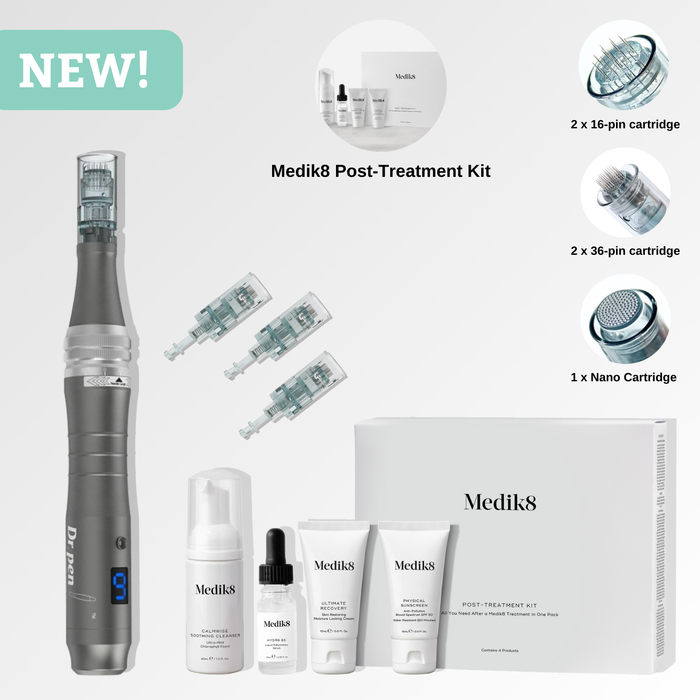
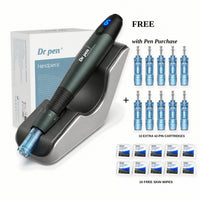
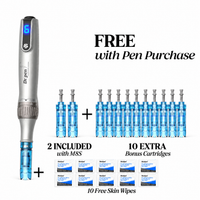
If a clinic uses Dr. Pen, request the model name rather than accepting the brand name alone. Our guide to evaluating a microneedling medical device covers regulatory claims, intended users and cartridge checks in more detail.
Use the consultation to assess judgment and communication
A consultation should establish whether treatment is appropriate, not simply which package to buy. The provider should discuss your goals, explain realistic limitations and give you room to decline.
These questions help reveal how the practice handles patient care:
- Why is this suitable for my concern? Ask about alternatives, including postponing treatment or seeking a medical assessment.
- What risks apply to me? Request an explanation that reflects your skin history rather than a generic reassurance.
- What recovery should I expect? Ask for written aftercare and clear guidance on when to contact the clinic.
- Who helps if something goes wrong? Obtain contact details and an explanation of how medical review is arranged.
A trustworthy microneedling aesthetician should be comfortable explaining uncertainty. Guaranteed scar removal, promises of zero risk or pressure to pay before a health assessment are reasons to pause.
These safeguards apply across elective care. Advice on choosing a dental studio for routine and cosmetic care similarly emphasizes practitioner registration, transparent costs and avoiding pressure to accept cosmetic treatment.
Consent should be a discussion, not just a signature collected immediately before the procedure. You should understand who will perform treatment, what is being proposed and how follow-up works before agreeing.

Compare the full cost before buying a series
There is no single price that establishes whether treatment is good value. Location, treatment area, practitioner qualifications and whether the procedure uses radiofrequency can all affect the quote. Compare like-for-like services rather than treating every appointment labeled “microneedling” as equivalent.
Ask for a written price that identifies the procedure, treatment area, consultation fee and any separate charges for numbing, aftercare or follow-up. If a series is recommended, ask why that number of sessions is proposed and when progress will be reassessed.
Before buying a package from a microneedling aesthetician, check cancellation terms, refund conditions and what happens if your health changes or further sessions become unsuitable. Also ask whether the same practitioner will see you throughout the course.
A discount does not compensate for unclear licensing, reused cartridges or missing follow-up arrangements. Equally, a high price is not evidence of better qualifications. Establish the safety basics first, then compare the complete cost of appropriate care.
Recognize reasons to postpone or choose someone else
Pause the booking if the provider will not identify their license, cannot explain their legal scope or treats a course certificate as universal authorization. The same applies if they refuse to name the device, suggest reusing a cartridge or dismiss questions about infection control.
A rushed health history is another concern. A responsible practitioner may postpone treatment or refer you elsewhere when your skin or medical history needs further assessment. That is a sign of appropriate judgment, not poor customer service.
If you have an unexplained lesion, active skin disease or a history that raises safety concerns, seek assessment from an appropriate licensed medical professional before committing to a cosmetic procedure.
Frequently asked questions
Does a microneedling aesthetician need a medical license? The required credential depends on state law and the exact procedure. An esthetician license or microneedling course certificate alone does not establish permission to perform medical microneedling. Verify the practitioner’s scope with the responsible state board.
Is a microneedling certificate enough? No. A certificate documents completion of a particular course. It does not replace a required professional license, establish legal scope or demonstrate competence with every device. Check the training content, supervised practice and relevance to your treatment.
Can estheticians legally perform microneedling in Michigan? Do not rely on an esthetician license alone as authorization. Ask Michigan LARA to confirm the current rules for the practitioner’s credential and the exact procedure, including any proposed supervision or delegation arrangement.
How much does a typical session cost? Costs vary by location, treatment area, provider and procedure type. Request an itemized consultation quote rather than relying on a national average. Confirm whether follow-up, aftercare and any recommended series are included before comparing clinics.
Does an FDA-cleared pen make the practitioner qualified? No. Device clearance and practitioner qualifications are separate checks. Clearance applies to a particular device and intended use; it does not license the operator or guarantee an individual outcome.
Verify the practitioner first, then research the equipment
The right microneedling aesthetician should be able to explain their legal authority, relevant training and safety procedures without relying on sales claims. If those answers are incomplete, resolve them before paying a deposit.
For Dr. Pen equipment research, Dr. Pen Store offers genuine pens, replacement cartridges and product support. Confirm the exact model, manufacturer-verifiable authenticity and cartridge compatibility before purchasing. Authentic equipment matters, but it never replaces appropriate practitioner credentials or changes who is legally permitted to perform treatment.