


Searching for “microneedling machine professional” as a backup purchase is different from choosing your clinic’s main device. The priority is not a longer feature list. It is whether the reserve can legally support the intended treatment, accept the right sterile cartridges and enter service without staff improvising.
Quick answer: First evaluate a second unit of your established system. Compare alternatives against regulatory documentation, cartridge availability, operator training and support. A different model can work, but it needs its own documented assessment. A backup is not automatically interchangeable with the device it replaces.
What “microneedling machine professional” means for backup use
A reserve device should address a defined interruption: a failed handpiece, depleted battery, damaged power supply or equipment sent away for service. Different failures require different solutions. A spare handpiece will not solve a shortage of compatible cartridges, and another cordless pen is little help if neither battery has been maintained.
Decide which appointments the backup must support before comparing specifications. Record the treatment categories, intended users and clinical setting. Identify anything that must be postponed rather than transferred to another system.
For a professional microneedling machine, backup suitability has three parts: documented eligibility for the intended use, operational readiness and staff competence. Passing only one or two is insufficient.
Also define the required recovery window. A device kept onsite and checked regularly serves a different purpose from one ordered after a breakdown. If your plan depends on delivery, confirm stock status and realistic shipping arrangements rather than treating a listing as guaranteed availability.
Start with documentation, not the feature list
Verify the exact model and regulatory record
In the US, “professional,” “medical grade” and “FDA registered” do not establish that a device has FDA clearance for your intended treatment. Registration and listing are not the same as clearance or approval.
For devices using the 510(k) pathway, clearance generally concerns substantial equivalence to a legally marketed device. It does not mean every advertised application, accessory or combination treatment has been evaluated.
Search the FDA’s 510(k) database using the manufacturer, device name and clearance number supplied by the seller. Reconcile the record with the labeling, instructions for use and exact model offered. Resolve discrepancies before purchase.
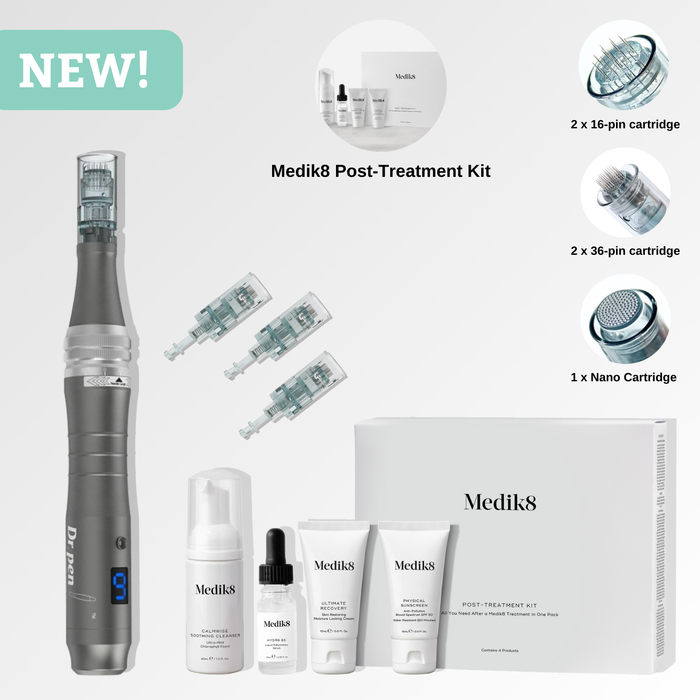
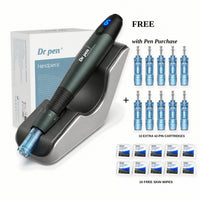
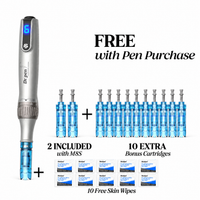
Dr. Pen Store identifies the A20 as FDA-cleared. Purchasing sign-off should still match its documentation to the exact device, intended users and proposed use. Do not transfer that status to other Dr. Pen models because they share a brand name.
Your professional microneedling machine assessment should retain these records, not merely a screenshot of a marketing badge. The store’s guide to evaluating a microneedle medical device before buying provides a broader purchasing framework.
Confirm cartridge compatibility and infection-control requirements
Cartridges are part of the backup system, not an accessory to arrange later. Obtain written confirmation of compatibility with the exact model and revision. Similar appearance, needle count or a connector that seems to fit is not sufficient evidence.
Check the required sterile packaging, single-use labeling, expiration dates and storage conditions. Review the manufacturer’s instructions for contamination barriers, cartridge installation, cleaning and disinfection. Do not assume a disposable cartridge eliminates every possible contamination pathway within a handpiece.
A professional microneedling machine also needs a reliable consumable supply. Ask whether compatible cartridges are routinely stocked, how substitutions are handled and whether product revisions affect fit. Avoid planning around unverified third-party cartridges.
Separate reserve stock where necessary so routine appointments cannot consume the entire backup allocation. Set a reorder point using expected demand, replenishment lead time and a sensible safety margin. Rotate stock by expiration date rather than leaving an unopened reserve box untouched indefinitely.
Check handling, controls and power arrangements
Your reserve does not need the highest advertised speed or maximum depth. It needs controls that trained users can understand and verify against the instructions for use.
Evaluate grip, visibility of settings, cartridge attachment, cable routing and how settings are selected. Record differences from the primary system. A similar-looking dial does not establish identical needle extension or treatment behavior, so settings should not be copied automatically between models.
For a battery-powered professional microneedling machine, confirm charging instructions, permitted operating modes and battery-care requirements. Do not assume a device can run while charging or that an apparently charged battery retains adequate capacity after prolonged storage.
Ask what is user-serviceable and what requires authorized assessment. A backup plan should not depend on staff opening a handpiece, improvising a charger or bypassing a fault indication. Keep the correct power accessories with the reserve and label them clearly.
Compare backup strategies, not advertised power
The most useful comparison is how each option changes your clinic’s workload and substitution risk.
| Backup approach | Potential operational advantage | What must be checked |
|---|---|---|
| Second unit of the established model | May reduce differences in controls, training and inventory | Exact revision, cartridge compatibility and independent readiness |
| Different conventional microneedling pen | Provides another purchasing option if the primary system is unavailable | Separate documentation, training, consumables and approved workflows |
| Multifunction device | May support additional services within an appropriately assessed workflow | Requirements for every modality and whether added complexity helps backup use |
| RF microneedling system | Relevant to a separately established RF service | Energy-specific training, oversight, indications and maintenance |
Two identical devices are not fully independent if they rely on the same faulty charger or the last remaining cartridge box. Conversely, selecting another brand does not automatically provide better resilience if its consumables are difficult to obtain.
The best professional microneedling machine for reserve duty is the one your practice can keep ready within a defined, documented workflow. Compare recovery time and operational complexity alongside acquisition cost.
Where the Bio Pen Q2 fits into this assessment
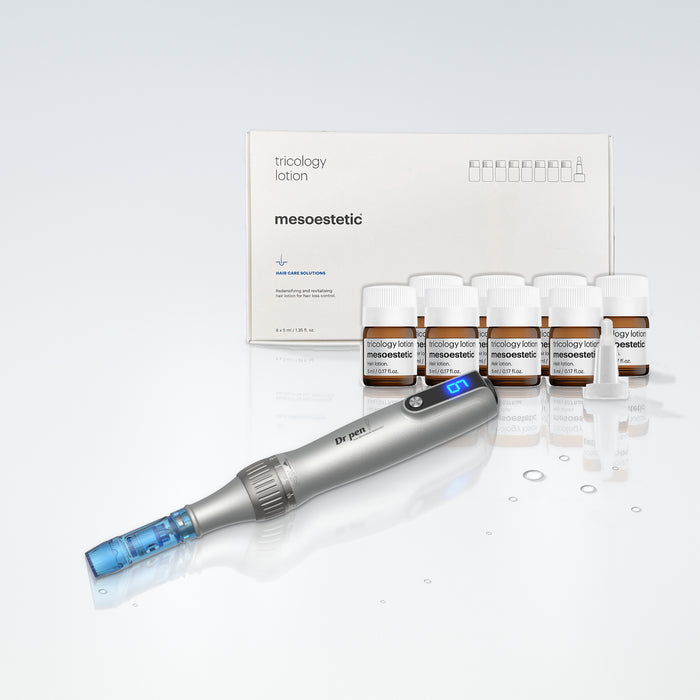
The Bio Pen Q2 By Dr. Pen Ems Led Micro Current Probe combines microneedling, EMS electroporation and LED light therapy. Its induction base stops the pen when it is placed down and starts it when lifted off.
Those characteristics make it a different purchasing proposition from a reserve selected solely to reproduce an established microneedling workflow. A practice considering it should assess each modality, its documentation and the training needed for the intended use.
The induction-base behavior also belongs in staff familiarization and handling checks. It does not replace the manufacturer’s shutdown instructions, contamination controls or safe cartridge handling.
Do not infer clinical interchangeability, regulatory clearance or suitability for a particular treatment from the presence of multiple functions. If your only objective is continuity during equipment failure, consider whether additional modes simplify the job or create another set of competencies to maintain.
A multifunction device may merit consideration, but “three treatments in one” is not itself evidence that it is the right backup.
Verify who may operate the reserve in your state
Purchasing eligibility and permission to perform a treatment are separate questions. A seller accepting an order does not establish that the buyer may legally use the device on clients.
Use a state-specific process rather than relying on a national course provider’s summary. First identify the operator’s license and the exact proposed procedure. Then consult the relevant state medical, nursing or cosmetology and esthetics board, depending on who will perform and supervise treatment.
Check the governing statutes, board rules and published guidance for procedure classification, delegation, supervision, facility requirements and any restrictions relevant to your workflow. For medical-board contacts, the Federation of State Medical Boards directory provides a starting point.
Where the rules are unclear, request written clarification or obtain advice from qualified healthcare counsel. Record the source, date and conclusion in the device file. Revisit the assessment when staffing, supervision, equipment or services change.
A professional microneedling machine should enter service only after the practice has confirmed appropriate authorization and training. A course certificate does not expand statutory scope of practice. Likewise, a supervisor’s availability does not automatically make a delegated procedure permissible.
Confirm insurance coverage for the reserve model and intended procedures rather than assuming coverage follows the operator alone.
Keep conventional and RF backup plans separate
Conventional microneedling and radiofrequency microneedling are not interchangeable services. RF systems introduce energy delivery as well as needle penetration, bringing additional treatment parameters, device requirements and potential complications.
Do not substitute a conventional pen for a booked RF procedure without an appropriate clinical reassessment and informed discussion. Nor should an RF system become an emergency replacement simply because it also uses needles.
Review the FDA’s microneedling device information alongside the exact system’s labeling. Check the intended treatment areas, patient population, warnings and requirements relevant to its use.
The same caution applies to products used during treatment. Do not assume a cosmetic serum, drug or biologic is suitable for use with a device because it appears in a bundle. Assess combinations against labeling, applicable requirements and the practice’s clinical governance process.
Budget for readiness, not just the purchase
There is no meaningful universal price for a professional microneedling machine backup without specifying the model, included components and support terms. Obtain an itemized quotation and compare the cost of keeping it usable.
| Cost category | Questions for the purchasing file |
|---|---|
| Equipment | Are required power accessories, bases and protective components included? |
| Consumables | What do compatible cartridges and required barriers cost at your expected volume? |
| Training | What staff time, instruction and competency checks are needed? |
| Maintenance | What servicing, battery care or other checks does the manufacturer require? |
| Support and warranty | What is covered, what is excluded and who pays shipping? |
| Inventory | How much stock may expire before use, and what replenishment lead time applies? |
Keep hypothetical savings separate from confirmed costs. A reserve may preserve appointments, but not every interrupted treatment can safely continue, and not every postponed appointment becomes lost revenue.
For a simple business case, divide annual backup-readiness costs by the contribution retained from an otherwise lost appointment. Use contribution after variable costs, not the advertised treatment price.
Ask about repair procedures, assessment charges and replacement arrangements in writing. Do not assume a warranty includes a loan device or guaranteed turnaround.
If a validated monthly readiness test requires a fresh cartridge, budget for those test cartridges as well as cartridges used for patients.

Qualify the reserve before the first interruption
Complete an acceptance check when it arrives
Do not discover an incorrect model or missing accessory during a fully booked clinic day. On receipt, reconcile the shipment with the order and retain the invoice, model identifiers, serial number and applicable authenticity-verification records.
Inspect packaging and components, then perform only the functional checks permitted by the manufacturer. Verify compatible consumables, charging arrangements, controls and any supplied base. Quarantine equipment with damage, uncertain provenance or unresolved discrepancies.
Next, document staff familiarization. Users should know where the professional microneedling machine differs from the primary system, how to recognize faults and when not to proceed. Training should cover handling, infection prevention, records and escalation, not simply switching the device on.
Run a non-patient readiness rehearsal appropriate to the instructions for use. Confirm that the team can locate the device, retrieve its documentation and assemble the required supplies without borrowing incompatible items from another system.
Record who completed acceptance, which checks were performed and any outstanding conditions. Release the reserve for use only when those conditions have been resolved through the practice’s approval process.
Maintain a dated readiness record
Storage is not a maintenance plan. Establish checks based on manufacturer instructions, battery requirements, stock expiration and your clinic’s expected response time.
A readiness record should identify the device, inspection date, cartridge stock, accessory condition and any service restriction. Assign ownership so checks do not disappear between clinical and administrative teams.
Store clean equipment and consumables according to their instructions, protected from unsuitable environmental conditions and accidental use. Do not pre-open sterile cartridges to save time during a future interruption.
Include ordinary room-readiness details. Provide secure storage for personal items, including diamond engagement rings, whenever the practice’s hand-hygiene and jewelry policy requires their removal.
A professional microneedling machine marked “backup” should have the same traceability and infection-prevention discipline as routinely used equipment. Record faults immediately and make unavailable status unmistakable, rather than leaving a defective device in its usual storage location.
Decide what happens when the primary device fails
Write the interruption procedure before you need it. The first action is a safe pause and appropriate patient assessment, not an automatic handpiece swap.
The responsible clinician should determine whether treatment can continue, needs modification or should stop. That decision depends on the patient, what has already occurred, the fault and the proposed replacement. Scheduling pressure is not a clinical justification for substitution.
If continuation is appropriate, follow the reserve system’s instructions and the practice’s approved protocol. Use a new sterile cartridge and required barriers in accordance with those instructions. Do not transfer settings or accessories merely because the two systems look alike.
Document the primary device fault, the reserve device identifier, relevant consumable traceability and the clinical decision. Explain material changes to the patient and update consent where required.
Remove the failed unit from service and follow applicable incident-reporting and manufacturer-reporting processes. Before returning it to circulation, complete the required assessment and release checks. A repaired primary device should not quietly become an unchecked backup.
Use a purchasing sign-off checklist
Before placing the order, ask the clinical lead and purchasing owner to confirm:
- Defined purpose: The reserve covers named services and foreseeable equipment failures.
- Verified documentation: The exact model, intended use and regulatory claims have been reconciled.
- Legal and insurance fit: Scope, supervision and coverage have been checked for the proposed workflow.
- Consumable readiness: Compatible sterile cartridges, required barriers and replenishment arrangements are identified.
- Operational readiness: Training, acceptance checks, storage and maintenance have named owners.
- Support terms: Warranty exclusions, service procedures and any replacement arrangements are documented.
Treat unresolved safety or authorization questions as purchase blockers. Convenience features and a discount cannot compensate for missing documentation. Where an answer depends on a supplier’s assurance, obtain it in writing and keep it with the equipment record.
Frequently asked questions
Is a second identical pen always the best backup? No. It may simplify training and inventory, but it can share the same supply vulnerabilities as your primary device. Check exact revisions, independent power accessories and cartridge availability before deciding.
Can a different brand or model take over midway through treatment? Not automatically. The responsible clinician must assess the patient, the interruption and the replacement system. Different controls, labeling or accessories may make postponement more appropriate than substitution.
How much should a clinic spend on a reserve? Compare itemized equipment costs with annual readiness costs, including consumables, training, maintenance and potential stock expiration. Use current quotations rather than generic price ranges that may exclude necessary components or support.
Does occasional use reduce the documentation required? No. Infrequent operation does not remove scope-of-practice, infection-prevention or device-labeling requirements. It can increase the need for familiarization checks because staff have fewer opportunities to retain model-specific knowledge.
Can home-use availability establish professional suitability? No. Availability to consumers does not establish suitability for a clinic’s intended procedure. Assess the exact model’s labeling, regulatory status and operational requirements independently of where it is sold.
Choose for a controlled handover
Start with the treatments your reserve must support, then narrow the options by documentation, cartridge supply and staff readiness. Use Dr. Pen Store’s guide to choosing the right Dr. Pen microneedling pen to organize your shortlist. Before ordering, request model-specific information and resolve compatibility questions so the backup is assessed before it is needed.