

A 0.5 derma stamp is not automatically gentle just because its needles are short. It can puncture the skin, so a conservative routine starts with deciding whether needling is appropriate, checking the device and allowing recovery, not choosing the busiest treatment schedule.
The safest starting point is an assessment by a qualified dermatologist or licensed clinician experienced in microneedling. This guide explains the decisions that matter before, during and after a session. It is general education, not a personalized treatment plan.
Understand what the 0.5 mm label actually means
The number usually describes the stated needle length or depth setting. It does not guarantee that every needle enters the skin exactly 0.5 mm. Pressure, skin thickness, device construction and how the head meets the skin all affect penetration.
A manual stamp presses needles into a localized area. A roller moves needles across the surface on a rotating head, while an automated pen repeatedly moves a cartridge’s needles. These designs are not interchangeable, even when their depth labels match. Our explanation of derma stamping versus other microneedling methods covers those differences.
Microneedling can improve selected skin concerns under appropriate clinical protocols, but that does not establish that every consumer stamp produces the same results. Visible redness is evidence of irritation, not proof that collagen has increased or scars will improve.
Is a 0.5 derma stamp appropriate for your skin?
Check suitability before buying supplies or marking a treatment date. Skin that tolerates ordinary skincare may still react badly to puncturing.
Postpone treatment and seek appropriate advice if you have:
- Active acne lesions, cold sores, another infection or open wounds in the intended area.
- Sunburn, an eczema or psoriasis flare, significant irritation or recent damage from another treatment.
- A history of keloids, poor wound healing or persistent pigmentation after inflammation.
- A bleeding disorder, immune suppression or medication that could affect bleeding or healing.
This is not a complete contraindication list. Discuss prescription skincare, isotretinoin use, recent cosmetic procedures and relevant medical conditions with your clinician. Never stop prescribed medication just to make room for needling.
Regulatory status also matters. The FDA’s guidance on microneedling devices states that it has not authorized microneedling medical devices for over-the-counter sale. An online listing, depth label or claim about another device does not establish that a particular manual stamp is FDA-cleared or suitable for self-treatment.
Prepare supplies without confusing clean with sterile
Before using a 0.5 derma stamp, confirm exactly how its needle head is supplied and whether the manufacturer provides an appropriate infection-control process. Washing a tool or soaking it in household alcohol does not make it sterile.
| Item to check | Conservative standard |
|---|---|
| Needle head | Prefer sealed, sterile, single-use heads with intact packaging and a valid expiry date |
| Device identity | Traceable manufacturer, clear instructions and identifiable model |
| Replacement parts | Explicit compatibility with the exact device, not just a similar-looking connection |
| Work area | Clean, dry surface away from splashes, pets and shared bathroom clutter |
| Disposal | A suitable sharps container and disposal method consistent with local rules |
Never share a needle device or save a single-use head for another session. If a fixed-head stamp lacks clear, validated reprocessing instructions, do not invent a home sterilization method.
Keep ordinary shopping separate from device verification. Whether you buy personal-care products from a pharmacy or a general marketplace such as Sandhai’s UAE online store, a cosmetic listing does not establish that a product is sterile or intended for use during needling.
Dr. Pen Store’s tips for cleaner, more consistent treatments provide additional preparation checks. Cleaning the workspace helps, but it cannot compensate for a compromised needle head.
Keep any clinician-approved session controlled
If your clinician considers a 0.5 derma stamp appropriate, follow the device instructions and their written plan rather than copying pressure, passes or treatment maps from social media.
Start with clean hands and prepare the skin exactly as directed. Do not stamp over makeup, inflamed spots, suspicious lesions or areas your clinician has excluded. Eyelids and other delicate structures are not suitable places to experiment.
A stamp should meet the skin squarely and lift away before repositioning. Do not drag an exposed needle head across the skin or convert stamping into a rolling motion. Pressure and the amount of coverage must come from the device-specific instructions, not a universal online recipe.
Do not chase bleeding, strong redness or pain. Repeatedly treating the same spot to make it look more affected adds injury without proving better results. Stop if the device catches, the head becomes damaged or discomfort is more than your clinician described.
Avoid experimenting with homemade mixtures, cosmetic serums or medications during needling. The FDA has not cleared microneedling devices for delivering cosmetics, topical medications or other products into the skin. An ordinary topical product is not automatically appropriate for contact with freshly punctured skin.
Give recovery priority over skincare actives
After a 0.5 derma stamp session, the next decision is whether the skin is recovering normally, not when you can add another treatment. Follow the aftercare instructions supplied by your treating clinician and the device manufacturer.
Once ordinary skincare is permitted, keep it simple. A mild cleanser and a bland, fragrance-free moisturizer may be suitable, depending on your clinician’s advice and your skin’s tolerance. A product that stings should not be treated as something to push through.
Pause potentially irritating products until the skin has recovered and your clinician says to restart them. These can include retinoids, exfoliating acids, scrubs, benzoyl peroxide and strongly fragranced products. Do not assume that every hydrating serum is appropriate immediately after needling.
Avoid picking, rubbing and activities that introduce unnecessary heat, friction or contamination during early recovery. Ask when you can resume makeup, strenuous exercise, swimming and your usual skincare rather than applying one timetable to every procedure.
Protect treated skin from sun exposure. Use shade and a hat while it is sensitive, and resume a tolerated broad-spectrum SPF 30 or higher sunscreen as directed. Irritation and ultraviolet exposure can complicate recovery, particularly if you are prone to post-inflammatory hyperpigmentation.

How often should you schedule treatment?
There is no universal safe frequency for a 0.5 derma stamp. A depth number alone cannot account for the device, actual skin injury, treatment area, medical history or response to the previous session.
Do not default to daily use or assume that weekly treatment is conservative. Professional microneedling protocols often leave several weeks between sessions, but those schedules cannot simply be transferred to an unidentified home device. Have a qualified clinician determine whether treatment is appropriate and what interval applies.
Recovery is a requirement, not permission to repeat treatment immediately. Skin can look less red before it has fully recovered. Persistent tenderness, tightness, flaking or stinging with basic skincare means you should postpone further needling and seek advice if symptoms are not settling.
A short treatment log can make follow-up more useful. Record the date, device and head used, treated area, immediate reaction and how long symptoms lasted. Note changes to skincare or medications as well.
If progress seems slow, do not automatically shorten the interval, increase pressure or choose longer needles. Reassess the diagnosis and treatment choice. Texture changes, pigmentation and acne scars are different concerns and may need different approaches.
Treat scalp use as a separate decision
Using a 0.5 derma stamp on the scalp is not simply a facial routine moved into the hairline. Scalp inflammation, hair products and concurrent hair-loss medications introduce additional considerations.
Hair loss deserves a diagnosis before a device purchase. Pattern hair loss, alopecia areata, scalp infection and scarring alopecia do not share one treatment plan. A painful, inflamed or scaly scalp should be assessed rather than stamped.
Research involving microneedling for hair loss uses defined protocols, sometimes alongside medication. It does not establish a universal home schedule or prove that every manual stamp will produce comparable results.
If you use minoxidil, ask the prescriber how it should be timed around any proposed procedure. Do not stamp through freshly applied medication or apply it immediately afterward to increase absorption. A disrupted barrier can change absorption and irritation risk.
Let your clinician specify scalp preparation, treatment boundaries and when topical medication can resume. If those instructions are missing, pause rather than filling the gaps with advice from a device review. Daily facial skincare tolerance is not a reliable guide to scalp treatment tolerance.
Know which reactions need medical attention
Some temporary redness or sensitivity can occur after microneedling, but an online article cannot determine whether your reaction is normal. Symptoms should follow the recovery pattern your clinician described, not become progressively worse.
Stop using a 0.5 derma stamp and seek prompt medical advice for spreading redness, increasing warmth, swelling, worsening pain, pus, fever or new blisters. Uncontrolled bleeding, eye involvement or a severe allergic reaction requires urgent care.
Persistent darkening, pale patches, track-like marks or prolonged sensitivity also deserve assessment before another session. Do not try to correct these changes with more needling, exfoliation or a stronger active ingredient.
Keep the device packaging and note the products used so a clinician can review them. Do not reuse a suspect needle head to see whether the same reaction happens again.
Frequently asked questions
Does 0.5 mm microneedling do anything? It can puncture skin and trigger a tissue response, but that alone does not establish a useful cosmetic result. Outcomes depend on the condition, device, technique and treatment plan. Evidence for a professional protocol does not automatically validate a consumer stamp.
Is a 0.5 derma stamp safer than a roller? Neither is automatically safer. A stamp uses localized, vertical contact, while a roller moves needles on a rotating head. Sterility, device quality, technique and skin suitability matter more than choosing by shape alone.
Can I use the same needle head if I disinfect it? Do not reuse a single-use head. Household disinfection is not sterilization, and it does not reverse needle damage. Follow the manufacturer’s validated instructions; if those are absent or unclear, do not improvise.
Should I move up to longer needles if I see no improvement? No. Greater depth increases injury and is not a reliable shortcut to better results. Ask a dermatologist whether microneedling is appropriate for the concern before changing the device or treatment intensity.
Choose the device and replacement system together
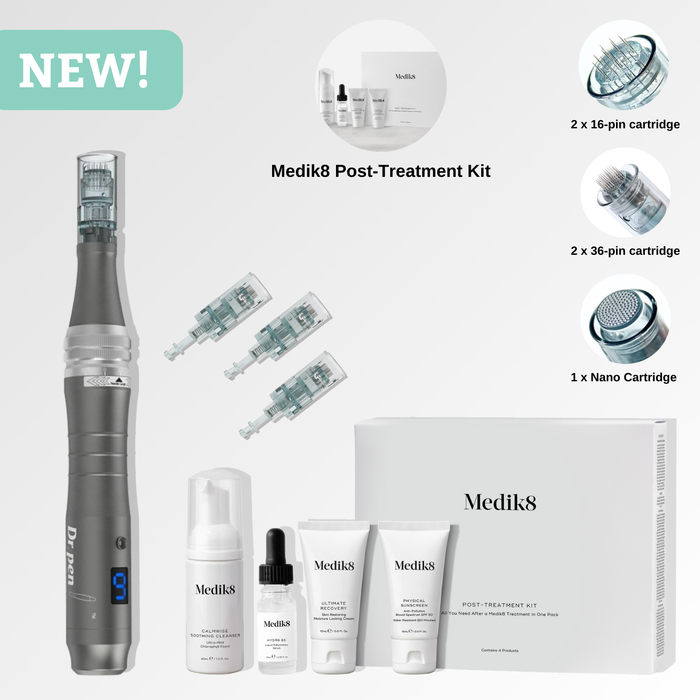
If you are comparing a manual stamp with an automated pen, start with traceability, intended use, clear instructions and access to the correct replacement heads. Do not choose solely by the maximum depth advertised.
Use Dr. Pen Store’s guide to devices, compatible cartridges and skincare to separate those purchases. Before ordering, confirm the exact model and cartridge compatibility with support. A matching depth label does not make two devices, or their consumables, interchangeable.